

Sex-Linked Chicks-The Cost Advantage over Straight Run Chicks
Updated: 3 days ago
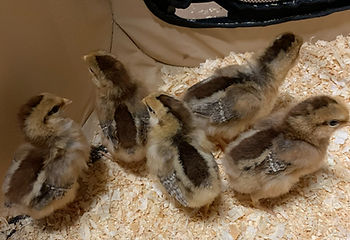
If you've ever ordered day-old chicks, you've probably come across the term straight-run.
Straight-run chicks are chicks that have not been separated by sex. When you purchase them, you don't know how many will grow into pullets and how many will turn out to be cockerels.
For some chicken keepers, that's perfectly fine.
But if your goal is to build a laying flock, unwanted cockerels can create a challenge.
This is where sex-linked chicks can offer a significant advantage.
At Roslin Poultry Ranch, I've become particularly interested in sex-linked breeding because it allows me to produce chicks whose sex can be determined at hatch based on their colouring or pattern.
But sex-linked chicks aren't simply "sexed chicks." There is some interesting genetics behind how they are produced.
What Is a Straight-Run Chick?
A straight-run chick is simply a chick that has not been separated into male and female at hatch.
If you order ten straight-run chicks, you could end up with:
Mostly pullets
Mostly cockerels
Or a combination of both
There is no guaranteed male-to-female ratio.
For someone wanting to raise chickens primarily for eggs, this can create an unwanted problem.
Cockerels require the same feed, brooder space, litter, care and time as pullets while they are growing.
And if you aren't able—or don't want—to keep roosters, you eventually have to find another home for them.
What Is a Sex-Linked Chick?
A sex-linked chick is produced by crossing specific genetic combinations that allow the male and female offspring to be visually distinguished at hatch.
The important part is that the parents must have the right genetics for the cross to work.
This isn't something that can be achieved simply by crossing any rooster with any hen.
The resulting chicks inherit a combination of genes that causes the male and female chicks to have different visual characteristics at hatch.
This allows the breeder to identify the sex of the chicks without waiting weeks for their adult characteristics to develop.
That is what makes sex-linked chicks particularly useful for backyard chicken keepers who primarily want pullets.
How Is Sex-Linking Different From Auto-Sexing?
The terms sex-linked and auto-sexing are sometimes used interchangeably, but they aren't exactly the same thing.
Sex-linked
Sex-linked chicks are produced through a specific breeding cross involving sex-linked genes.
The male and female chicks have different appearances at hatch, allowing them to be separated by sex.
Auto-sexing
An auto-sexing breed or line has been developed so that the chicks can be visually sexed at hatch based on characteristics that are consistently associated with their sex.
The distinction is important because the ability to sex the chicks depends on the specific genetics and breeding combination.
In either case, the benefit to the buyer is the same:
You can identify the female chicks at hatch rather than raising an unknown group of straight-run chicks and waiting to see which ones develop into cockerels.
Why Does This Matter to a Backyard Chicken Keeper?
For someone who wants a flock of laying hens, the biggest advantage is simple:
You can start with the chicks you actually want.
If you order ten female sex-linked chicks, you aren't intentionally purchasing ten chicks and accepting the possibility that some will turn out to be male.
That can make planning your flock much easier.
You can also plan ahead for:
Coop space
Brooder space
Feed requirements
Future laying flock size
Number of hens your property can comfortably accommodate
And if you don't want to keep a rooster, you don't have to deal with the uncertainty of straight-run chicks.
What About the Cost of Feed?
One of the arguments often made for sex-linked chicks is that you save the cost of feeding unwanted males.
There is some truth to this, but I think it's important to look at the bigger picture.
A chick doesn't suddenly consume an entire bag of feed on its own. Feed consumption depends on the number of birds, age, breed, feed type and management system.
However, every unwanted cockerel that you raise still requires:
Feed
Water
Brooder space
Litter
Heat during the brooding period
Time and labour
Additional housing as the birds grow
And eventually, you may need to find a suitable home for that cockerel.
So the value of a sex-linked chick isn't simply "you save the cost of a bag of feed."
The real advantage is that you are starting with a chick whose sex has already been identified, allowing you to put your resources toward the birds you actually intend to keep.
Why Sex-Linked Chicks Can Cost More
You may notice that female sex-linked chicks can cost more than straight-run chicks.
There's a reason for that.
Producing sex-linked chicks requires specific breeding groups.
The breeder must maintain the appropriate genetics, carefully select breeding birds, manage the breeding groups and then identify the female chicks at hatch.
There is also additional labour involved in sorting and verifying the chicks.
So when you purchase a female sex-linked chick, you're not simply paying for the chick itself.
You're also paying for the breeding work and selection that makes it possible to identify that chick as female at hatch.
Sex-Linked Does Not Mean 100% Guaranteed Sex
This is an important distinction.
Sex-linked chicks can be highly reliable when the correct breeding genetics are used and the chicks are properly identified.
However, no visual sexing method should be treated as infallible.
Correct parentage and careful observation are important, particularly when working with developing breeding lines.
For this reason, breeders should be transparent about how their chicks are sex-linked and what characteristics they use to identify the females.
Sex-Linking Is About Genetics, Not Just Colour
One of the things that fascinates me about sex-linked chickens is that the colour or pattern you see at hatch is actually the visible result of genetics.
The breeder isn't simply choosing chicks that "look female."
The breeding cross has been designed so that the male and female offspring inherit different combinations of sex-linked genes, creating a visible difference between them.
This is what makes sex-linked breeding such an interesting part of poultry genetics.
It also means that a sex-linked cross usually needs to be carefully planned.
You can't necessarily take the female offspring from one sex-linked cross and breed them together with any rooster and expect the next generation to be sex-linked.
The specific genetics of the parents matter.
Our Sex-Linked Chick Program at Roslin Poultry Ranch
Sex-linked breeding has become an important part of my own breeding program.
I've been working with different breeding combinations to develop female-only chick offerings that allow customers to purchase chicks with the sex determined at hatch.
One of the projects we've developed is our Spice Girls.
The Spice Girls are a selection of female-only chicks produced from our sex-linked breeding groups.
Rather than being a single breed, the Spice Girls are a collection of female chicks from different breeds and crosses within our breeding program.
Depending on the hatch, the selection can include different egg-colour genetics and breeding lines.
The goal is to give backyard chicken keepers the opportunity to purchase a variety of interesting female chicks without having to raise a group of straight-run chicks and wait to discover which ones are cockerels.
The Spice Girls selection cannot be individually customized. Customers receive a variety of female chicks from the available sex-linked breeding groups.
Interested in our Spice Girls female-only chicks?
What Makes Sex-Linked Chicks Different From Buying Pullets?
There is another advantage to sex-linked chicks: you can start with female chicks while still experiencing the process of raising them yourself.
Some chicken keepers prefer started pullets because they don't want to brood chicks.
Others enjoy raising chicks from the beginning.
Sex-linked chicks can be a good option for someone who wants the experience of raising chicks but doesn't want the uncertainty of straight-run chicks.
If you would rather skip the brooding stage altogether, started pullets provide another option.
The Bottom Line
Straight-run chicks can be a wonderful choice for chicken keepers who don't mind the possibility of raising both males and females.
But if your primary goal is to build a laying flock, sex-linked chicks offer an important advantage:
You can identify the females at hatch and focus your time, feed and resources on the birds you intend to keep.
Behind that simple benefit is some fascinating genetics.
Producing sex-linked chicks requires carefully planned breeding combinations, and developing reliable sex-linked lines is an ongoing process of breeding, observing and selecting.
That's one of the reasons I find poultry genetics so fascinating.
The chick you see standing in your brooder is the result of generations of genetics coming together—and sometimes, understanding why that chick looks the way it does is just as interesting as watching it grow.
Recommended Reading:


Comments