

Marek's & MG Vaccinations in Chicks: Not A Cure-all
- Feb 1
- 5 min read
Updated: Feb 26
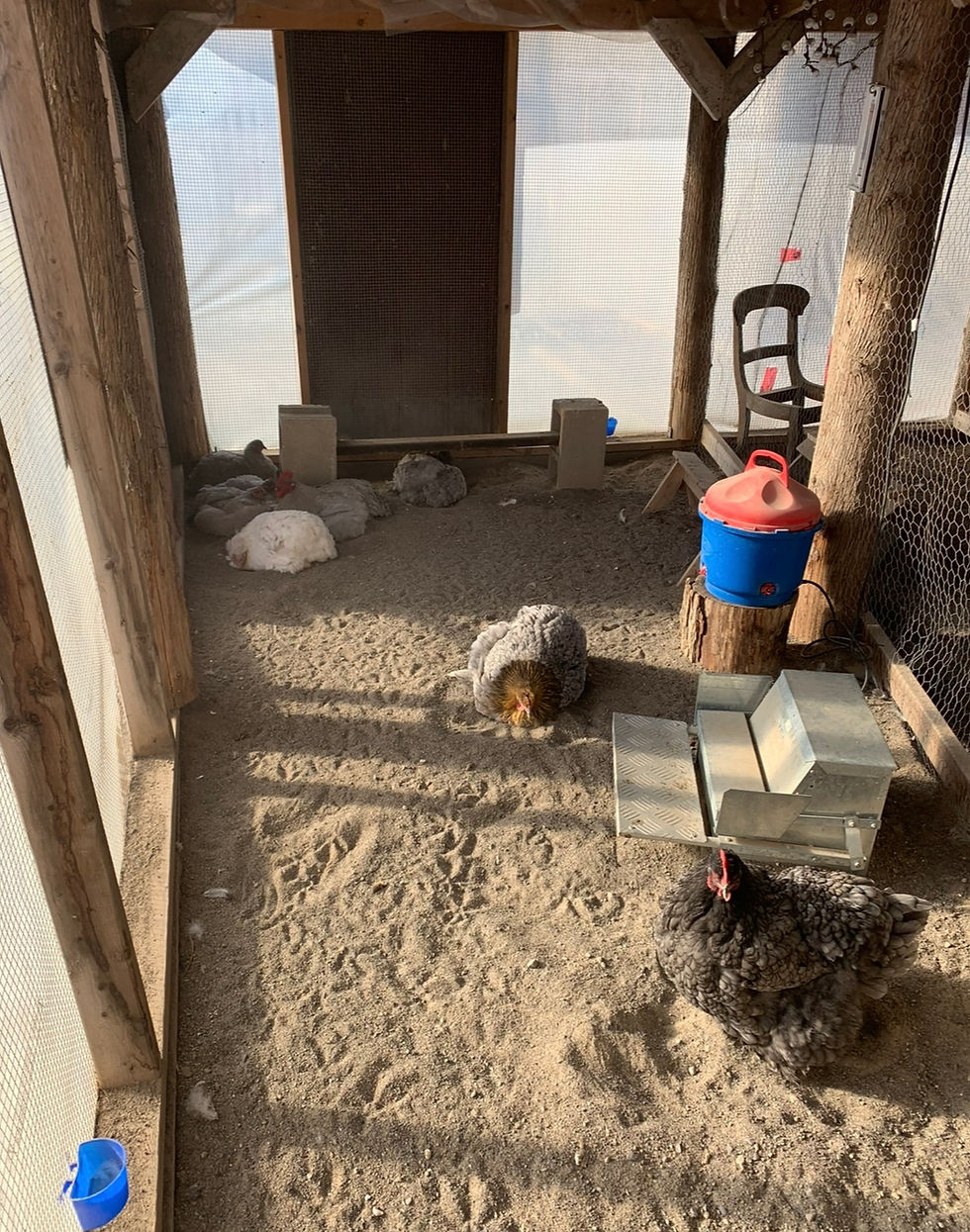
When buying chicks, you’ll often see “vaccinated for Marek’s” or “MG-clean / MG-vaccinated” listed as major selling points. While vaccinations absolutely have value, they are often misunderstood. Vaccines are tools for risk reduction, not magic shields—and they do not replace good management, biosecurity, or genetics.
This article explains what Marek’s disease and MG actually are, how the vaccines work, why vaccination alone is not the end-all, be-all solution, and our approach at the Ranch.
What Is Marek’s Disease?
Marek’s disease is a highly contagious viral disease of chickens caused by a herpesvirus. It primarily affects young birds, most commonly between 6 weeks and 6 months of age, though exposure can happen much earlier.
How Marek’s Spreads
Marek’s is spread through dander (skin flakes) that infected birds shed into the environment. Once present, the virus can survive in litter, dust, and housing for a very long time—sometimes years.
Chicks are usually exposed by:
Contaminated brooders or coops
Adult birds that are carriers
Dust carried on clothing, shoes, or equipment
Symptoms of Marek’s Disease
Symptoms vary depending on the form of the disease, but may include:
Progressive paralysis (legs, wings, neck)
Weight loss despite eating
Grey or misshapen pupils (ocular Marek’s)
Tumors in internal organs
Sudden death with no warning
Some birds may carry the virus and never show symptoms, while others become severely affected.
The Marek’s Vaccine: What It Does (and Doesn’t Do)
The Marek’s vaccine is typically given at hatch, often within the first 24 hours of life.
What the Vaccine Does
Reduces the severity of the disease
Helps prevent tumor development
Allows birds to survive exposure that might otherwise be fatal
What the Vaccine Does Not Do
It does not prevent infection
It does not stop viral shedding
It does not eliminate Marek’s from your flock or environment
Vaccinated birds can still become infected and still spread the virus—they are simply less likely to show severe symptoms.
What Is MG (Mycoplasma gallisepticum)?
Mycoplasma gallisepticum (MG) is a bacterial respiratory disease that affects chickens, turkeys, and other poultry. Unlike Marek’s, MG is not a virus—and that distinction matters.
How MG Spreads
MG is spread through:
Direct bird-to-bird contact
Respiratory droplets
Contaminated equipment
Vertical transmission (from hen to chick through the egg)
Once MG enters a flock, it is extremely difficult to eliminate.
Symptoms of MG
Symptoms may include:
Sneezing, coughing, or wheezing
Nasal discharge or bubbles in the eyes
Swollen sinuses
Reduced growth and feed efficiency
Drop in egg production
Stress (cold, heat, overcrowding, shipping, breeding pressure) often triggers flare-ups in birds that previously appeared healthy.
MG Vaccination & “MG-Clean” Flocks
MG management is very different from Marek’s management.
MG Vaccines
MG vaccines exist, but they:
Do not cure MG
Do not prevent infection entirely
Can complicate testing and diagnosis
Vaccinated birds may still carry and transmit MG.
MG-Clean vs MG-Positive
MG-clean flocks are maintained through strict testing, biosecurity, and closed breeding programs
MG-positive flocks may look healthy but can pass MG to offspring or spread it under stress
Once MG is introduced, eradication usually requires complete depopulation—which is why serious breeders place such importance on prevention.
Biosecurity: Your First and Strongest Line of Defense
Vaccines can reduce risk, but biosecurity is what actually keeps diseases out of your flock. Marek’s and MG are most often introduced through everyday, well-meaning actions that poultry keepers don’t realize carry risk.
Biosecurity doesn’t have to be extreme—but it does need to be intentional.
Control What Comes Onto Your Property
The most common way disease enters a flock is through new birds, equipment, or people.
Best practices include:
Quarantining all new birds for a minimum of 30 days (longer is better)
Keeping new birds physically separated with no shared air space if possible
Not sharing feeders, waterers, crates, or tools between flocks
Avoiding poultry swaps, auctions, and mixed-bird sales when possible
Even birds that look perfectly healthy can be carriers.
Limit Exposure From Other Flocks
MG and Marek’s can hitch a ride on clothing, footwear, and hands.
Simple habits that make a big difference:
Dedicated coop boots and clothing
Washing hands before and after flock chores
Changing clothes after visiting other poultry keepers or feed stores
Cleaning and disinfecting equipment that leaves and re-enters your property
Manage Age Groups Carefully
Mixing age groups increases disease pressure.
To reduce risk:
Avoid placing chicks into housing that previously held adult birds
Raise chicks in clean, well-sanitized brooders
Practice all-in, all-out flock management when possible
Reduce Stress to Reduce Disease Expression
Stress does not cause Marek’s or MG—but it activates them.
Common stressors include:
Overcrowding
Temperature extremes
Poor ventilation
Shipping, handling, or frequent changes
Breeding pressure
Low-stress birds are better able to cope with exposure and less likely to show clinical illness.
Source Birds Responsibly
Where your birds come from matters just as much as how you raise them.
When sourcing chicks or breeding stock:
Ask about disease testing and flock status
Understand the difference between vaccinated, clean, and tested
Avoid impulse purchases from unknown or mixed-source sellers
A single addition can change your entire flock’s health status.
Our Approach at the Ranch
At the Ranch, we have chosen not to routinely vaccinate our chicks for Marek’s or MG.
This decision is not based on the belief that vaccines are ineffective—but on the understanding that vaccination does not prevent infection or transmission of these diseases. Instead, our focus is on prevention through biosecurity, management, and selective breeding.
Our program prioritizes:
Strict biosecurity and limited flock exposure
Closed or carefully managed breeding groups
Clean brooding environments
Low-stress rearing practices
Sourcing and maintaining birds with strong overall resilience
By managing disease pressure at its source, rather than masking it, we aim to raise birds that are well-suited for responsible, biosecure environments.
Because unvaccinated birds may be more vulnerable if exposed to high disease pressure, our chicks are best suited for:
Buyers with good biosecurity practices
Flocks that are not frequently mixed with outside birds
Keepers who understand the importance of quarantine and stress reduction
We believe in transparency, education, and informed choice—so customers can decide what approach best fits their own flock and management style.
The Takeaway
Marek’s and MG vaccinations can be valuable tools—but they do not replace good flock management or disease awareness.
Understanding what these diseases are, how they spread, and what vaccines realistically do allows poultry keepers and breeders to make informed decisions, rather than relying on a false sense of security.
Healthy flocks are built through education, prevention, and responsible practices—not vaccines alone.
Education empowers better poultry keeping. Vaccines help—but knowledge is the strongest line of defense.


Comments